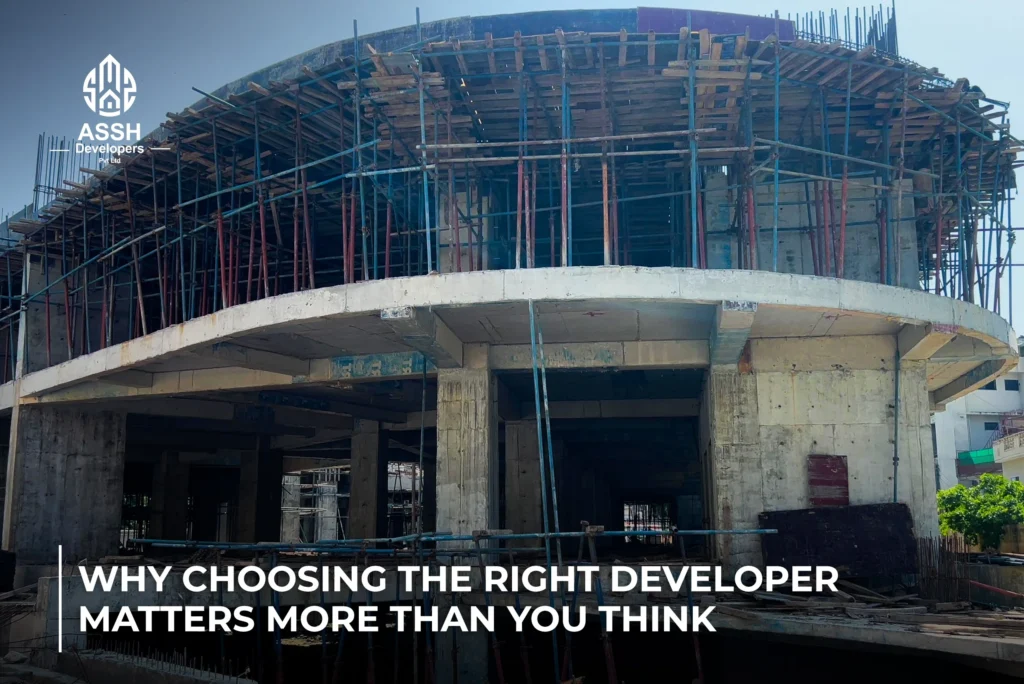
Why Choosing the Right Developer Matters More Than You Think
You’ve decided to invest in real estate. You’ve identified a location. You’ve run the numbers. But then you hit the hardest part of the decision: Which developer should you trust with your money?
This is not a trivial question. A single poor developer choice can mean the difference between a 25% return and a complete loss. In Pakistan’s rapidly growing real estate market—particularly in Rawalpindi and Islamabad—the stakes are even higher. You’re competing with institutional investors, overseas Pakistanis moving capital, and corporate entities. They all share one thing in common: they’ve learned to evaluate developers meticulously before signing.
Yet most individual investors still make this decision based on surface-level factors: a glossy brochure, a charismatic sales pitch, or because their cousin bought there. This is exactly how people lose money.
This guide reveals the seven criteria that institutional investors and seasoned real estate professionals use to separate legitimate, trustworthy developers from risky ventures. We’ll use ASSH Developers and their flagship Sardars Mall project as a case study—not because they’re perfect, but because they’re transparent enough to examine against these criteria.
By the end of this article, you’ll have a developer evaluation framework you can apply to any project, anywhere.
Criterion 1: Regulatory Approval & Legal Standing
Why This Matters: The Foundation of Safety
Before anything else—before beautiful renderings, before groundbreaking announcements, before payment plans—a developer must have legal authority to sell.
In Pakistan, this means multiple layers of approval:
1. RDA Approval (Rawalpindi Development Authority) or CDA (Capital Development Authority) The development authority must have approved the land use and master plan. This isn’t bureaucratic theater. This approval means the project meets zoning laws, infrastructure requirements, and public safety standards. It also means the developer has proven they can work with government bodies—a critical sign of legitimacy.
2. Completion & Occupancy Certificate Track Record A developer’s previous projects should have completion certificates. This proves they don’t just start projects; they actually finish them. In a market flooded with abandoned and incomplete developments, this is non-negotiable.
3. Land Ownership Verification The developer must own or have clear, long-term rights to the land. Avoid projects where land is rented, sharecropped, or subject to complex family disputes. Simple rule: if the developer can’t clearly explain the land ownership structure in one sentence, walk away.
4. No Litigation Against the Developer Check court records. Have investors sued this developer before? Are there disputes with government authorities? A few lawsuits is normal in real estate. Multiple ongoing disputes with former investors is a red flag.
Case Study: ASSH Developers
ASSH Developers has RDA approval for Sardars Mall in Rawalpindi—publicly documented and verifiable. This approval matters because:
- The project meets Rawalpindi’s infrastructure capacity standards
- The mixed-use model (apartments, offices, commercial, food court) aligns with RDA’s urban development vision
- Regulatory approval actually reduces ASSH’s ability to make arbitrary changes—everything must align with approved plans
This is the baseline. Without it, none of the following criteria matter. ASSH clears this hurdle, which is why we can meaningfully evaluate them on deeper levels.
What to Check:
- Request RDA approval certificate from the developer
- Verify it’s current and not conditional
- Check if previous projects received completion certificates
- Search court records for litigation against the developer
Criterion 2: Financial Stability & Project Funding Model
Why This Matters: Your Money Actually Gets Built
A developer can have all the approvals in the world, but if they run out of money mid-project, you’re stuck owning a half-built property in an incomplete development.
Financial stability has three components:
1. Transparent Funding Model How is the project being financed? Options include:
- Developer’s own capital (most secure, but slowest)
- Pre-sales funding (developers use investor payments to build—common, moderate risk)
- Bank financing (requires bank confidence, adds stability)
- Institutional investors (private equity or real estate funds—highest credibility)
The best developers use a mix. Pure pre-sales models are risky because cash flow depends entirely on hitting sales targets. If sales slow, construction stops.
2. Historical Financial Performance
- How many projects has the developer completed?
- On what timeline?
- Did they complete within budget?
- Do former investors report on-time delivery?
This requires homework. Call people who invested with the developer before. Talk to people living in their completed projects. Their candid feedback is worth more than any financial statement.
3. Liquidity & Reserve Position Major developers maintain cash reserves specifically for contingencies. Ask: “What happens if construction costs spike 20%? Do you have reserves to absorb that, or will you demand more investor money?”
Case Study: ASSH Developers
ASSH’s funding model for Sardars Mall is primarily pre-sales based, with developer equity. Here’s what this means practically:
- Lower Risk Than Pure Pre-Sales: ASSH is investing significant capital alongside investor money, meaning they’re exposed to the same risks you are
- Transparent Timeline: ASSH publishes construction updates, which is unusual. This transparency suggests confidence in their delivery timeline and reduces information asymmetry
- Diversified Portfolio: ASSH isn’t a one-project company. They have multiple commercial and residential projects. This means Sardars Mall isn’t their only revenue source or their only risk focus
What you can’t verify without being an insider is ASSH’s exact cash reserves or detailed funding breakdown. But their commitment to transparency and their multi-project portfolio are positive signals.
What to Check:
- Ask the developer directly about their funding model
- Request references from investors in their previous projects
- Verify they’re not over-leveraged across multiple projects
- Check if project costs are covered by a mix of sources (not 100% dependent on your pre-sales)
Criterion 3: Reputation & Investor Satisfaction Track Record
Why This Matters: Past Behavior Predicts Future Behavior
Your best predictor of future performance is past performance. This isn’t original wisdom, but it’s reliably true in real estate.
Reputation operates on multiple levels:
1. Documented Investor Testimonials Legitimate developers have verifiable reviews and testimonials from actual investors—not just marketing quotes. Look for:
- Specificity (not generic praise, but details about delivery times, communication, issue resolution)
- Mixed experiences (perfect 5-star reviews are often fake; real investors mention both strengths and areas for improvement)
- Long-term investor sentiment (what do investors say after the project is complete, not just during sales phase?)
2. Industry Recognition Has the developer won awards? Have they been featured in credible business publications? Are they recognized by real estate industry bodies? This matters because:
- Awards require third-party vetting
- Industry recognition is harder to fake than self-promotion
- It signals the developer has survived scrutiny
3. Social Proof & Community Sentiment
- Are there active communities of investors/residents discussing the developer’s projects?
- Is sentiment positive or negative in these communities?
- Do complaints follow patterns (late delivery, poor communication, quality issues) or are they random?
4. Responsiveness to Investor Concerns A great developer doesn’t ignore unhappy investors. They address concerns, fix legitimate issues, and communicate transparently about problems. A mediocre developer dismisses critics or goes silent when criticized.
Case Study: ASSH Developers
ASSH has built a multi-project portfolio and generated mostly positive investor sentiment around Sardars Mall. Here’s what signals legitimate reputation:
- Construction Update Transparency: ASSH publishes regular construction updates with photos and timelines. This is rare and suggests they’re confident in delivery. Developers who hide progress often have something to hide.
- Media Presence: ASSH appears in local and business media discussing real estate trends, not just self-promotion. This editorial coverage is harder to fake than advertising.
- Investor Community: Sardars Mall investors discuss the project actively in online real estate forums. While some have criticisms, the overall tone suggests confidence in delivery—a sign of healthy developer-investor relationships.
- Executive Visibility: ASSH’s leadership (Chairman, President/CEO) has published messages about company vision. This personal accountability matters; developers run by anonymous entities are riskier.
What to Check:
- Search Google for developer reviews (not just their website testimonials)
- Join Facebook groups or forums where investors discuss their projects
- Call 3-5 people who have invested with them before
- Research media coverage—do they appear in unbiased publications or only in paid advertising?
Criterion 4: Project Design & Feasibility
Why This Matters: A Beautiful Plan That Can’t Be Built is Worth Nothing
This is where many investors get seduced. Renderings are gorgeous. The master plan looks sophisticated. The amenities are world-class. But can it actually be built within the stated timeline and budget? That’s the real question.
1. Design Credibility
- Who designed the project? Established architects have reputations to protect; they’re less likely to back unfeasible plans
- Does the design align with Rawalpindi/Islamabad’s actual infrastructure and climate?
- Are amenities realistic for the location? (A rooftop ski resort in Rawalpindi is a red flag.)
2. Realistic Phasing Quality developers plan projects in realistic phases. They don’t promise everything simultaneously. Feasible phasing looks like:
- Phase 1: Foundation, core infrastructure (12-18 months)
- Phase 2: Structural completion, interior work (18-24 months)
- Phase 3: Finishing, occupancy (6-12 months)
Unrealistic phasing promises everything in 18 months or builds 50 different building types simultaneously. This signals either incompetence or intentional overselling.
3. Infrastructure Readiness
- Is the location’s road infrastructure ready?
- Can the existing utilities (water, electricity, sewage) handle the project?
- What happens if utilities need upgrades? Who pays?
A feasible project plans for these realities. An unrealistic project ignores them.
4. Contingency Planning Ask the developer: “What’s your plan if [common problem] happens?” Common problems include:
- Construction material price spikes
- Utility delays
- Weather-related construction delays
- Regulatory delays
A competent developer has thought through these scenarios. An unprepared developer gives vague answers or dismisses concerns.
Case Study: ASSH Developers
Sardars Mall’s design reveals sophistication in several ways:
- Established Architects: ASSH partnered with credible architects (viewable on their website). These aren’t unknown entities; they have established practices and professional reputations.
- Mixed-Use Rationale: The project combines apartments, offices, commercial, and a food court. This isn’t just “everything to everyone”—it’s a deliberate strategy to create 24-hour activity and reduce vacancy risk. Single-use developments (apartments-only or offices-only) face higher occupancy risk.
- Realistic Phasing: Sardars Mall’s construction progresses in logical phases. Early phases focus on infrastructure and foundation. Later phases complete interiors. This sequencing suggests competence, not wishful thinking.
- Location Intelligence: The site’s proximity to commercial hubs, residential areas, and the F-9 area creates built-in demand for all components. This isn’t accidental; it reflects smart site selection.
What to Check:
- Request detailed architectural renderings and floor plans (not just promotional images)
- Verify the architects’ credentials and previous work
- Ask about phasing timelines and what triggers each phase
- Understand the project’s contingency plans for common delays
Criterion 5: Transparent Pricing & Payment Structure
Why This Matters: Hidden Costs Destroy ROI
You’ve analyzed the numbers. The per-square-foot price seems reasonable. The potential rental yield looks good. Then, after signing, you discover:
- An “administrative fee” of 5%
- A “maintenance fund” deposit
- Unexpected “development charges”
- Undisclosed property taxes or HOA fees
Suddenly, your numbers don’t work.
Legitimate developers are transparent about all costs. Not just the base price—the total cost of ownership.
1. Itemized Pricing Transparency
- Base price per square foot
- All additional charges (separated and explained)
- Payment schedule (which percentage due when?)
- Late payment penalties (reasonable or punitive?)
2. Hidden Costs Disclosure
- Maintenance/management fees
- Community development charges
- Parking costs (if separate)
- Registration and transfer costs
- Property tax estimates
3. Payment Plan Flexibility
- Options for different buyer profiles (investors, owner-occupants, first-time buyers)
- Clear consequences for delayed payments
- Refund policy if you need to exit
4. Comparison with Market Rates Is the price competitive? Compare:
- Similar properties in similar locations
- Per-square-foot rates for apartments/shops/offices
- Total cost of ownership vs. per-unit price
Case Study: ASSH Developers
ASSH’s Sardars Mall pricing for apartments and shops is publicly listed on their website:
- Itemized Breakdown: Base price is clearly separated from additional charges. This transparency is uncommon and credibility-building.
- Flexible Payment Plans: ASSH offers multiple payment options—full upfront, phased payments, or installment plans. This flexibility suggests confidence and customer-centricity.
- Competitive Pricing: Sardars Mall’s per-square-foot pricing for similar units is competitive with other Rawalpindi developments. It’s neither suspiciously cheap (red flag for quality) nor excessively expensive (suggests inflated positioning).
- Maintenance Disclosure: Management and maintenance fees are disclosed upfront, allowing investors to calculate true ROI including ongoing costs.
What to Check:
- Get a complete, itemized price breakdown in writing
- Understand every fee and charge
- Calculate total cost of ownership (not just purchase price)
- Compare against 3-5 comparable properties in the area
- Verify payment terms are standard for the market
Criterion 6: Communication & Investor Relations Infrastructure
Why This Matters: Problems Happen; Communication Determines Your Stress Level
Every real estate project faces challenges. Delays happen. Costs spike. Plans change. The question isn’t whether problems occur—it’s how the developer communicates about them.
Poor communication is often a precursor to poor project delivery. Developers who hide problems are developing them into crises.
1. Regular Investor Updates
- How frequently does the developer communicate?
- Are updates proactive (sharing progress) or reactive (only responding to complaints)?
- Do updates include metrics (percentage complete, timelines, photos)?
2. Accessible Points of Contact
- Can you easily reach someone with authority?
- Is there a dedicated investor relations team?
- Do calls/emails get answered within 48 hours?
3. Dispute Resolution Process
- What happens if there’s a disagreement about progress or quality?
- Is there a formal process, or does it depend on who you know?
- Has the developer resolved disputes fairly in the past?
4. Transparency During Setbacks
- When problems occur, does the developer acknowledge them immediately?
- Do they explain the cause and solution?
- Or do they remain silent until forced to acknowledge problems?
Case Study: ASSH Developers
ASSH’s investor relations approach shows sophistication:
- Construction Update Portal: ASSH publishes regular construction updates with photos and timeline information. This is exceptional. Most developers only communicate when pursuing new sales.
- Clear Contact Channels: Their website lists dedicated contact points for investors, with phone numbers and email addresses. This accessibility reduces information asymmetry.
- Consistent Messaging: Across their media, ASSH’s messaging about timelines and quality is consistent. Inconsistency is often a sign of disorganization or deception.
- Leadership Visibility: Company executives have published statements about project status and vision, adding personal accountability.
This infrastructure suggests ASSH understands that investor confidence is built through consistent, transparent communication.
What to Check:
- How often does the developer communicate with investors?
- Can you get contact information for a dedicated investor liaison?
- Have they responded to investor concerns on public forums?
- Do their communications include objective metrics (photos, percentages, dates)?
Criterion 7: Market Positioning & Competitive Advantage
Why This Matters: Projects in Competitive Markets Are More Likely to Succeed
Your investment isn’t just about the developer—it’s about the project’s position in the market.
Strong market positioning means:
- Less competition for residents/tenants
- Higher potential occupancy rates
- Better rental yields
- Lower vacancy risk
1. Location Intelligence
- Is the location growing or declining?
- What’s the demographic trend? (Are people moving toward or away from the area?)
- What’s the competitive supply? (How many similar projects exist in a 2-mile radius?)
2. Demand Indicators
- Are comparable properties renting/selling quickly?
- Are rental rates stable or declining?
- Is there organic demand (beyond developer marketing)?
3. Unique Value Proposition
- What makes this project different from 10 others in the same area?
- Why would a tenant/resident choose this over alternatives?
- Is the differentiation sustainable or easily copied?
4. End-User Economics
- Do the rental yields make sense for the location?
- Will the target tenant (corporate office, young family, retail shop) actually pay the projected rates?
Case Study: ASSH Developers
Sardars Mall’s market positioning is exceptionally strong:
Location Intelligence:
- Rawalpindi’s commercial and residential sectors are growing rapidly
- The F-9 area (business hub) is nearby, creating office demand
- Residential zones (Bahria, DHA, others) are expanding, creating apartment demand
- Food court demand is high in a region with limited quality dining options
Demand Indicators:
- Comparable commercial projects in Rawalpindi show high occupancy
- Rental rates for quality office space are rising
- Retail spaces in mall environments command premium rents vs. standalone shops
Unique Value Proposition:
- Sardars Mall is one of few mixed-use lifestyle malls in Rawalpindi
- It offers integrated living, working, shopping, and dining—rare in the market
- The scale and brand positioning differentiate it from smaller, fragmented developments
End-User Economics:
- Office rentals in Sardars Mall are competitive with other quality spaces in the F-9 area
- Apartment rentals are premium but justified by included amenities
- Retail shops command higher rents than standalone spaces but benefit from foot traffic and branding
This market positioning means Sardars Mall isn’t dependent on hype or excessive marketing. There’s organic demand for each component.
What to Check:
- Research the area’s demographic and economic trends
- Compare Sardars Mall’s pricing to 5 other projects in the same market
- Interview current residents/tenants in the area
- Verify that projected rental rates are achievable (not inflated)
- Understand why this specific project is better positioned than alternatives
The ASSH Developers Evaluation Summary
Using our seven criteria:
| Criterion | Rating | Key Insight |
| Regulatory Approval | ✅ Strong | RDA approval verified; compliant with zoning |
| Financial Stability | ✅ Good | Multi-project portfolio; mixed funding model |
| Reputation | ✅ Good | Positive investor sentiment; transparent communication |
| Design Feasibility | ✅ Strong | Credible architects; realistic phasing; location-intelligent |
| Pricing Transparency | ✅ Good | Itemized costs; flexible payment plans; competitive pricing |
| Communication | ✅ Strong | Regular updates; accessible investor relations |
| Market Positioning | ✅ Excellent | Strong location; organic demand; competitive advantage |
ASSH clears the fundamental bars for a legitimate, lower-risk investment opportunity. That doesn’t mean it’s guaranteed to succeed—no real estate investment is. But it means the developer has structured competence, transparency, and market advantage in their favor.
Red Flags: What Should Concern You
Before investing with any developer, ensure they don’t exhibit these warning signs:
1. Vague or Evasive Answers If the developer can’t clearly explain their funding, timeline, or pricing, walk away.
2. Pressure to Decide Quickly Legitimate opportunities don’t require rushed decisions. “Limited units” and “launch price ending soon” are sales tactics, not reasons to ignore due diligence.
3. No Track Record First-time developers are riskier. Can you afford that risk? Stick with developers who’ve delivered projects before.
4. Regulatory Issues Any ongoing litigation, regulatory disputes, or compliance issues should be thoroughly investigated before investing.
5. Unsustainable Promises If projected rental yields are 2-3x higher than comparable projects in the area, the numbers are likely wrong. Reject unrealistic projections.
6. No Physical Progress A project that’s been “under development” for 3+ years with minimal physical progress is a red flag. Visit the site yourself and verify construction is actually happening.
7. Inability to Provide References Ask for references from 5-10 investors in previous projects. If the developer won’t provide them or investors are hard to reach, that’s revealing.
The Due Diligence Checklist
Before investing with any developer, complete this checklist:
Phase 1: Regulatory & Legal
- [ ] Verify RDA/CDA approval
- [ ] Confirm land ownership
- [ ] Check for litigation against developer
- [ ] Confirm previous projects received completion certificates
Phase 2: Financial
- [ ] Understand funding model
- [ ] Request references from previous investors
- [ ] Verify project has contingency reserves
- [ ] Calculate total cost of ownership (not just base price)
Phase 3: Reputation
- [ ] Call 5-10 investors in previous projects
- [ ] Search for independent reviews online
- [ ] Check industry recognition and awards
- [ ] Read project forums or community discussions
Phase 4: Project Feasibility
- [ ] Review detailed architectural plans
- [ ] Verify architect credentials
- [ ] Understand project phasing
- [ ] Assess location infrastructure readiness
Phase 5: Pricing & Terms
- [ ] Get itemized, written price breakdown
- [ ] Understand all fees and charges
- [ ] Compare against 3-5 comparable projects
- [ ] Review payment terms and late payment policies
Phase 6: Communication
- [ ] Identify your primary contact
- [ ] Request project update frequency
- [ ] Review past communications from the developer
- [ ] Test response time by asking a question
Phase 7: Market Analysis
- [ ] Research area demographics and trends
- [ ] Compare rental rates to comparable projects
- [ ] Verify projected occupancy rates are realistic
- [ ] Understand competitive supply
Phase 8: Legal Review
- [ ] Have a lawyer review all purchase agreements
- [ ] Understand your rights if the project is delayed
- [ ] Know what happens if the developer faces financial stress
- [ ] Confirm your ownership/rental rights are legally protected
Common Questions Investors Should Ask
Q: How much of your own capital is invested in this project?
A: Strong developers invest alongside investors. If the developer isn’t financially exposed, they have less incentive to deliver.
Q: What’s your contingency plan if construction costs spike 20%?
A: This reveals whether the developer plans for realistic challenges or expects everything to go perfectly.
Q: How many investors in your previous projects have received refunds or experienced delays?
A: Honesty here builds credibility. All projects have some investor dissatisfaction. A developer who claims 100% satisfaction is being dishonest.
Q: What’s your worst-case timeline, and how would you handle it?
A: Realistic developers have thought through delays and communicate them honestly.
Q: Can you introduce me to 10 investors from your previous projects?
A: Their willingness and the positive experiences of those investors say everything.
The Bottom Line: Investing Intelligently
Real estate investing, done properly, is about identifying strong developers with strong projects in strong markets.
ASSH Developers and Sardars Mall meet these criteria. But the seven-point evaluation framework you’ve learned in this article applies to every developer, every project, everywhere.
Use it.
The developers worth investing with—the ones who’ve built sustainable businesses through transparency, competence, and delivery—they want you to evaluate them thoroughly. They’re confident in what they’ve built. They have nothing to hide.
The developers worth avoiding are the ones who discourage questions, pressure you into quick decisions, or get evasive when you dig deeper.
Trust the framework. Do the work. Your future financial security depends on it.
Next Steps: Ready to Invest Intelligently?
- Download the Due Diligence Checklist and apply it to any developer you’re considering.
- Schedule a consultation with ASSH Developers. Ask them the tough questions from this guide. Observe how they respond.
- Contact current Sardars Mall investors directly. Their firsthand experiences are worth more than any marketing material.
- Visit the construction site yourself. See the progress with your own eyes.
Real estate investing isn’t about following the crowd or trusting a single brochure. It’s about doing comprehensive due diligence and making decisions based on facts, not hype.
The framework is yours. Now use it.
About ASSH Developers
ASSH Developers is a Rawalpindi-based real estate development company specializing in mixed-use commercial and residential projects. Their flagship project, Sardars Mall, exemplifies their commitment to quality, transparency, and sustainable urban development in the twin cities. For more information about investment opportunities or to schedule a consultation, visit asshdevelopers.com.