Buying commercial property in Rawalpindi can pay off well. It can also go wrong fast if you skip the checks that matter. Shops, offices, and mixed-use units bring higher rent than most homes. But they also carry bigger risks: legal disputes, weak footfall, hidden costs, and developers who never finish what they start.
This article walks you through what to check before you put money down. You’ll learn how to read a developer, confirm a project is legal, judge a location, and work out what you’ll really earn.
Before you invest in commercial property in Rawalpindi, check five things:
- Developer’s completed projects
- RDA approval and a valid NOC
- Location and its footfall
- Full cost including maintenance and transfer fees
- Rental return you can realistically expect
Verify the paperwork yourself before you pay anything.
Why More Buyers are Looking at Commercial Property in Rawalpindi
Rawalpindi sits right next to Islamabad. That location keeps demand steady for shops and office space, especially in busy pockets like Satellite Town, Saddar, and the area around Chandni Chowk.
The market has also changed shape. Single shops are giving way to mixed-use buildings that put retail, offices, and homes under one roof. For a buyer, that can mean steadier rent, since one weak floor doesn’t sink the whole building.
Payment plans have opened the door too. You no longer need the full amount upfront. Many developers now sell commercial units on installments, so salaried buyers and first-time investors can take part.
Check the Developer’s Completed Projects First
The role of the developer matters more than the brochure. A good brochure is easy to print. A finished building is not.
Before you trust anyone with a booking, look for:
- Projects they’ve actually completed, not just announced
- How many years they’ve been building in the Twin Cities
- Live construction you can visit and inspect
- Feedback from people who’ve already bought from them
Ask to see a finished project. Then go stand in it. Check the build quality, the finishing, and whether the shops are occupied. A developer with a real record will happily show you around. One who dodges the question is telling you something.
Verify RDA Approval and the NOC Before You Pay Anything
In Rawalpindi, buyers have lost savings to schemes that were never legal in the first place.
A No Objection Certificate (NOC) is the official approval that lets a project develop land, sell units, and transfer ownership. Without it, the project can face legal action, and your ownership can be disputed later.
The risk is real and current. In early 2026, the Rawalpindi Development Authority declared hundreds of private housing schemes illegal across the district. The rules have also tightened. As of mid-2026, you need a Green Property Certificate to complete a property transfer in RDA jurisdiction. Both facts point to the same lesson: check the legal status yourself.
Here’s how to verify a project in a few minutes:
- Visit the official RDA website and search the approved list.
- Go to the RDA office in Rawalpindi and ask for the record in person.
- Ask the developer for a copy of the NOC or approval letter. A clean project has nothing to hide.
Don’t rely on a polished sales pitch or a screenshot. Confirm it at the source.
Location and Footfall: What Makes a Spot Worth Buying
A commercial unit lives or dies by the people who walk past it. A cheap shop in a quiet lane rarely beats a pricier one on a busy road.
Check these before you decide:
- Is it on or near a main road?
- Do people already walk through the area in good numbers?
- Are nearby shops and offices open and trading?
- Is there parking close by?
- Can customers reach it by public transport?
A spot that’s already busy costs more. A spot that’s still under construction can cost less, but you’ll wait for the footfall to arrive. Pick the trade-off that matches your patience and your budget.
Understand the Full Cost, Not Just the Sticker Price
The booking price is only the start. Add up everything before you decide what you can afford.
| Cost | What to expect |
| Down payment or booking | Upfront amount to reserve the unit |
| Installments | Monthly or quarterly payments over the plan |
| Maintenance and service charges | Ongoing, and usually higher for commercial than for homes |
| Transfer and registration | Fees to move ownership into your name |
| Taxes | Property and transfer taxes that apply |
| Fit-out | Cost to make the unit ready for a tenant |
Commercial upkeep tends to cost more than residential. Factor it in from the start, so a surprise bill doesn’t eat into your rent.
What Rental Return Can You Actually Expect?
Commercial property often pays higher rent than a home of similar price. That’s why many treat it as a long-term hold for investors.
But the number depends on three things: the location, your tenant quality, and the state of the market. A shop on a busy road with a reliable tenant earns. The same shop in a slow area, or with a tenant who pays late, earns much less.
Be careful with anyone who promises a fixed return. No one can guarantee it. Ask the rent that similar units nearby actually collect, then judge for yourself.
Is commercial property better than residential for rental income?
Commercial units usually have a higher rental return than homes. They also cost more to maintain, and they can sit empty longer between tenants. If steady rent is your goal and you can handle the upkeep, commercial can suit you well.
Lease terms and tenant quality
Your rent is only as reliable as your tenant and your lease.
Look at:
- Lease length. Longer leases give steadier income.
- Rent increases. Many commercial leases raise rent every few years.
- Lock-in periods. These stop a tenant from leaving early.
- The tenant themselves. A settled business that pays on time beats a higher rent you might never collect.
A strong tenant on a clear lease is worth more than a big number on paper.
Construction Quality and Delivery Timelines
If you’re buying off-plan, you’re trusting the developer to deliver on time and to a standard. That trust needs a basis.
Check the quality of their finished work: the materials, the finishing, the structure. Ask for the delivery date in writing, and ask what happens if it slips. A developer who gives honest timelines and clear updates is easier to trust than one who only sells a dream.
Buying a ready unit costs more but removes the wait and the delivery risk. Buying under construction costs less but asks for patience. Know which one you’re signing up for.
Payment Plans and Financing for Smaller Investors
You don’t need to be a big investor to buy commercial property here. Installment plans have changed that.
Many developers let you book a unit with a down payment, then pay the rest over months or years. That spreads the cost and lets salaried buyers take part. Read the plan closely: check the total price, the payment dates, and any penalty for a late installment. A plan that looks easy each month can still add up to more than you expected.
Red Flags that Should Make You Pause
Some warning signs are worth walking away from. Stop and think hard if you see any of these:
- No NOC you can verify on the RDA list
- No completed projects to visit
- Pressure to pay fast before you’ve done your checks
- A price far below the market with no clear reason
- Vague or missing ownership documents
- A developer who won’t share paperwork
One red flag is a reason to ask questions. Several together is a reason to leave.
Your Before-You-Sign Checklist
Run through this before you commit any money:
- You’ve visited a project the developer has finished.
- You’ve confirmed RDA approval and seen a valid NOC.
- You’ve checked the location, footfall, and access in person.
- You’ve added up the full cost, including maintenance and transfer fees.
- You’ve compared the expected rent with similar units nearby.
- You’ve read the lease terms and payment plan in full.
- You’ve asked for every promise, including the delivery date, in writing.
If you can tick all seven, you’re buying with your eyes open.
See the Building Before You Decide
The safest way to judge a commercial developer is to stand inside their work. Check the construction. Read the paperwork. Ask the questions that matter, and watch how they answer.
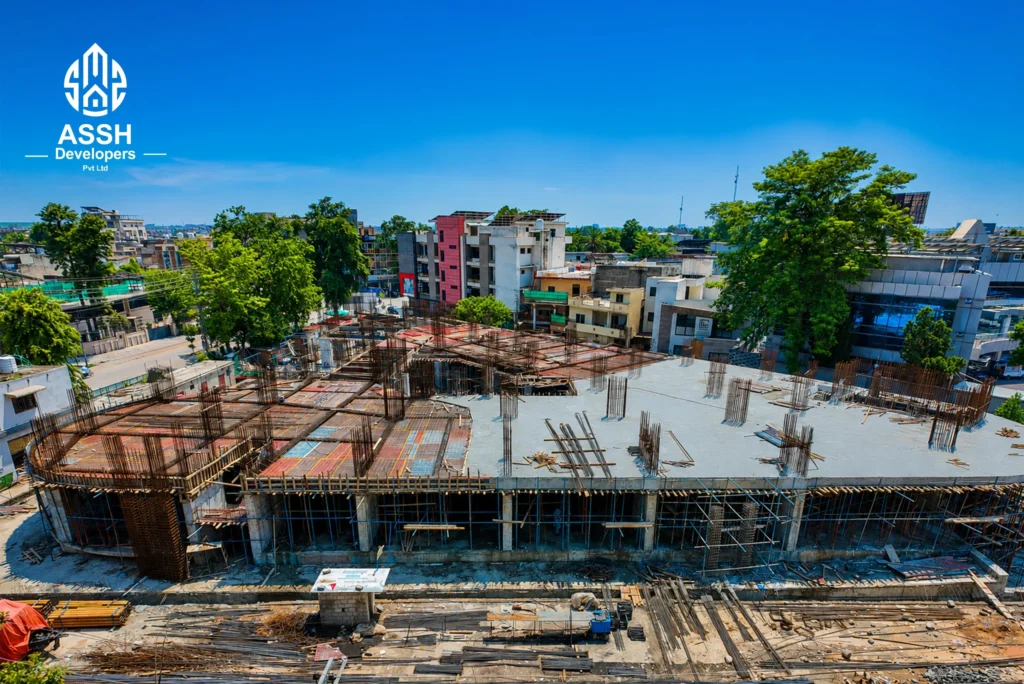
ASSH Developers builds residential and commercial projects across Rawalpindi and Islamabad, with clear pricing and honest timelines. Their current project, Sardar’s Mall, brings retail, offices, and homes together near Chandni Chowk in Satellite Town.
Book a visit to see the construction for yourself, and get the pricing and paperwork in plain terms before you decide.
Frequently Asked Questions
Commercial units often earn higher rent than homes, and demand in the twin cities stays steady. The return depends on the location, the tenant, and whether the project is legal. Do your checks first, and it can pay off well.
Visit the official RDA website at rda.gop.pk and search the approved list. You can also ask at the RDA office in person, or ask the developer for a copy of the NOC. Confirm it yourself before you pay.
It’s an official ownership document required for property transfers in RDA jurisdiction as of mid-2026. If you’re buying or transferring a unit in this area, you’ll likely need it. Check the current rule with the RDA before you complete a deal.
It varies with location, tenant, and market conditions. Commercial units usually bring a higher rental return than homes of similar price. Ask what nearby units actually rent for, rather than trusting a promised figure.
A ready shop costs more but starts earning right away and carries less delivery risk. An under-construction unit costs less but asks you to wait. Pick the one that fits your budget and how long you can hold out.