Most property buyers spend weeks comparing floor plans, locations, and price per square foot — and almost no time vetting the company actually building the thing. That’s backwards. A great unit from a developer who misses deadlines, cuts corners, or can’t produce clean approvals is still a bad investment.
Before you sign anything, here are six questions worth answering about any developer you’re considering in Pakistan’s residential or commercial market.
1. Is the Project Properly Approved?
In Pakistan, a legitimate project should be approved by the relevant development authority — the Rawalpindi Development Authority (RDA) in Rawalpindi, the Capital Development Authority (CDA) in Islamabad, or the equivalent body for the city you’re buying in — and should hold a valid No Objection Certificate (NOC). Don’t settle for a developer simply stating “RDA-approved” on a brochure or website. Ask for the approval or NOC reference number and verify it directly with the authority. A developer confident in their paperwork will have no issue providing it.
2. What’s the Developer’s Actual Track Record?
Marketing copy will always say a developer delivers on time. What matters is their history: how many projects have they actually completed, how many are still under construction years past their original date, and what do past buyers say once they’ve taken possession? Ask directly for a list of completed projects with handover dates, not just a list of projects currently being marketed. A developer with nothing to show beyond renders and a single in-progress project is a higher-risk bet than one with a visible delivery history.
3. Is the Payment Plan Actually Transparent?
A trustworthy payment plan spells out the down payment, every installment amount and due date, any balloon payments near possession, and what happens if you pay late or want to exit early. Vague language like “flexible plans available” or “competitive rates” without numbers attached is a flag to push for specifics before committing. Ask to see the full payment schedule in writing, not just a summary, and run the math yourself to make sure the installments actually add up to the quoted price.
4. Who’s Actually Designing and Building It?
A project is only as good as the architects, structural engineers, and contractors behind it. Ask who the design partner is and what else they’ve built — a named, established architecture firm with a visible portfolio is a very different signal than an unnamed “in-house design team.” The same goes for the construction contractor: a developer willing to name their structural engineer and main contractor, and point to other work those partners have delivered, is giving you something you can actually verify.
5. What Happens If the Project Is Delayed?
Construction timelines slip, even with good developers — what matters is whether your contract says anything about it. Before signing, check whether your sale or booking agreement specifies a compensation clause for delays, a clear refund policy if you want out, and whether the agreement itself is registered in a way that protects your claim to the unit. If a developer’s documentation is silent on delays entirely, that silence should be resolved in writing before you pay anything, not assumed to work in your favor later.
6. Can You Verify Any of This Yourself?
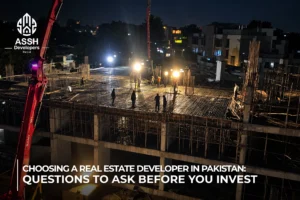
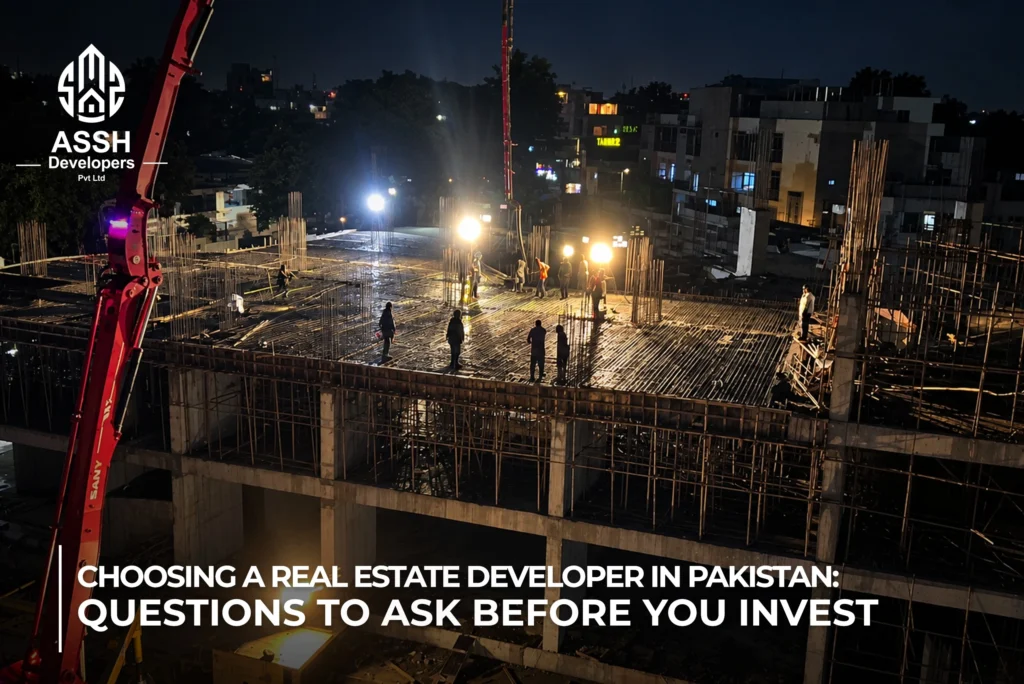
Don’t rely on the brochure or the sales office alone. Visit the actual site to see real construction progress against what’s being marketed, not just renders. Talk to people who have already bought from the same developer, ideally from an earlier, completed project, not just the one currently being sold. Check the relevant development authority’s public records for the approval status. A developer worth investing with won’t discourage any of this — if a sales team pushes you to skip verification and “just decide now,” treat that as information in itself.
The Quick Checklist
- Approval/NOC reference number verified directly with the development authority
- List of completed (not just marketed) projects, with handover dates
- Full written payment schedule, numbers checked against the quoted price
- Named architect, structural engineer, and main contractor
- Delay and refund terms spelled out in the agreement
- Site visited in person and at least one past buyer contacted independently
Frequently Asked Questions
What does RDA or CDA approval actually mean for a buyer? It means the development authority has reviewed and signed off on the project’s plans, land use, and compliance with local building regulations. Without it, a project can face legal challenges, construction halts, or difficulty transferring clean title later — risks that land squarely on the buyer, not just the developer.
How do I verify a developer’s NOC or approval number? Ask the developer for the specific reference number and contact the relevant authority (RDA, CDA, or the equivalent for your city) directly to confirm it’s valid and matches the project. Don’t rely on a logo or a stated claim on the website alone.
What if a developer won’t share documentation when asked? Treat it as a serious warning sign. A legitimate developer has nothing to lose by producing approval numbers, a payment schedule, or past project handover dates on request — reluctance to do so is itself useful information.
Are verbal promises from a sales team legally binding? Generally, only what’s written into your signed agreement carries weight. If a sales representative promises something — a discount, a specific completion date, a guarantee — get it added to the contract itself rather than relying on the conversation.
How long should a project like this realistically take from launch to handover? Timelines vary by project size and type, and delays are common across the industry, which is exactly why question 5 above (what happens if it’s delayed) matters more than the headline completion date on the brochure.
Should I involve a lawyer before signing? For a purchase of this size, having a lawyer review the sale agreement before you sign is a reasonable precaution, not an overreaction — particularly to confirm how delay, refund, and title-transfer terms are actually written.
A Developer That Welcomes the Questions
At ASSH Developers, we’d rather you ask these questions than skip them. If you’re evaluating a project in Rawalpindi or Islamabad and want to see our approvals, track record, or design and construction partners for yourself, get in touch with our team — or learn more about who we are and our design partnership.